
Indoor vs Outdoor Sauna: Which Is Best for Your Home?
(7 Factors to Consider)
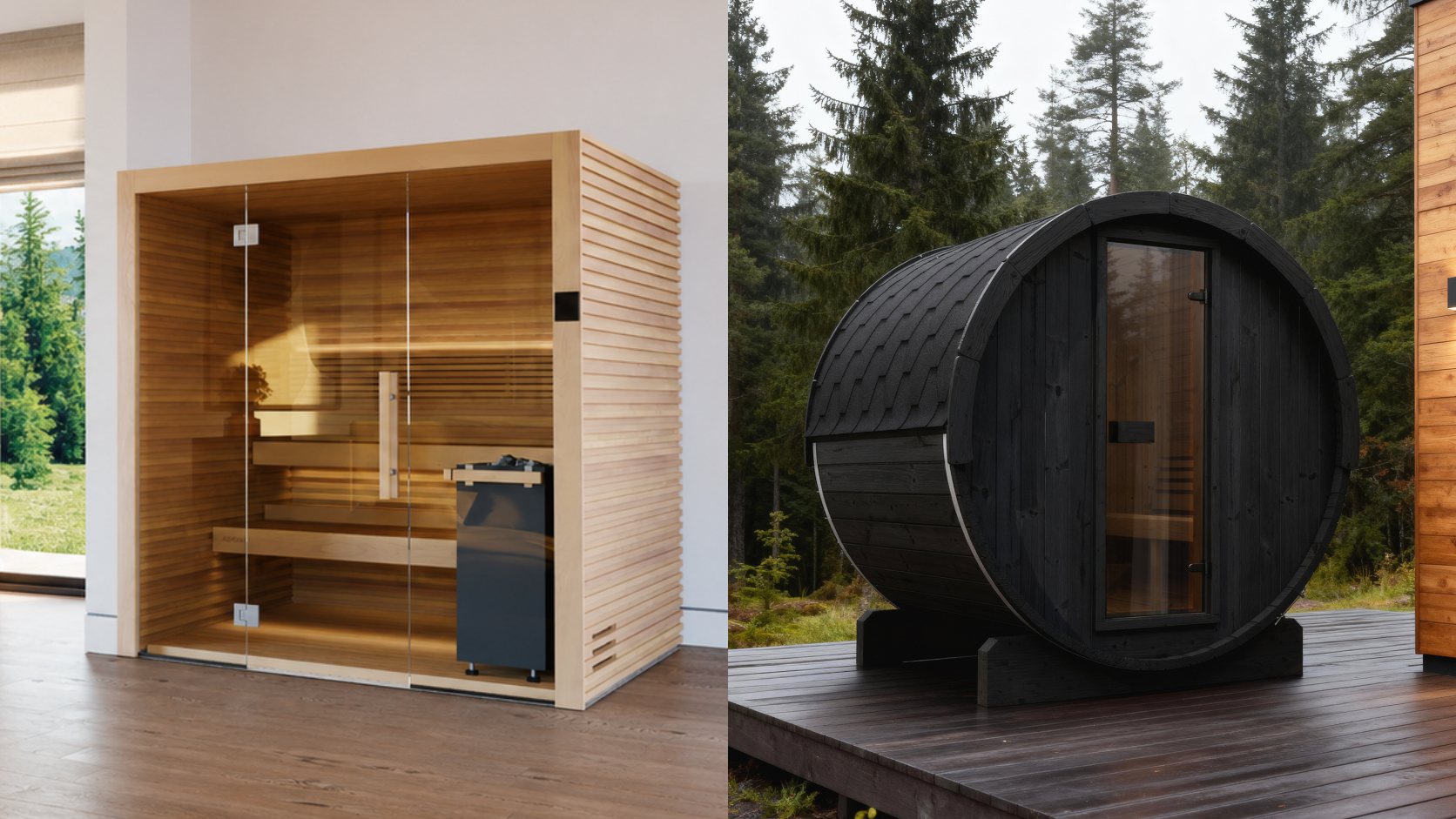
Adding a sauna to your home is one of the best decisions you can make for your wellbeing. Because it’s a space for relaxation, recovery, and connection, where you place it matters just as much as the sauna itself.
Before buying or building, the key question is: should your sauna be indoors or outdoors?
The answer depends on your home’s layout, your budget, and how you want your sauna to fit into your daily life.
Here are seven questions to help you decide.
1. How will sauna fit into your daily routine?
If you’re planning to use your sauna frequently - or for shorter sessions - easy access can make all the difference. Indoor saunas, especially those located in a bathroom, basement, or home gym, make it simple to step in after a workout or before bed without disruption.
With an outdoor sauna, you’ll step outside for each session, which many people enjoy as part of the overall ritual. Weather conditions like rain, snow, or very cold temperatures can sometimes influence how often you use it, especially for shorter sessions.
Consider: Which setup will feel most natural and enjoyable to use regularly?
2. What kind of installation process are you prepared for?
Your willingness to take on installation complexity may shape your decision.
Outdoor saunas avoid interior remodeling but require a stable, level base (like concrete, gravel, or a deck) and may involve permits, drainage planning, and running electrical or gas lines from your home.
Indoor saunas, on the other hand, can involve upgrades like ventilation, moisture-resistant materials, and possibly a 240V electrical connection (except for smaller plug-and-play infrared units).
Consider: Would you rather adapt your indoor space, or prepare an outdoor site?
3. How much space do you realistically have?
Your available space - inside and out - can be a deciding factor.
Indoor saunas are ideal if yard space is limited. Many models are compact enough to fit into bathrooms, basements, spare rooms, or even large closets.
Outdoor saunas require adequate yard or patio space and may be subject to zoning rules, building codes, or HOA guidelines, but they also give you the opportunity to create a dedicated space outside your main living area.
Consider: Are you working with more flexibility indoors or outdoors?
4. What does the cost look like - now and over time?
While the sauna units themselves are often similarly priced, installation and operating costs can vary.
Outdoor setups may include:
- A foundation or platform
- Running power to the structure
- Weatherproofing electrical connections
Indoor setups may include:
- Electrical panel upgrades
- Ventilation improvements
- Moisture-proofing and room modifications
- Structural reinforcement (for larger installs)
There’s also ongoing cost to think about. Indoor saunas tend to heat faster and retain warmth more efficiently, while outdoor saunas may require more energy in colder weather to reach and maintain temperature.
Consider: Are you optimizing for upfront cost, long-term efficiency, or both?
5. What level of maintenance fits your preferences?
Outdoor saunas are exposed to the elements year-round. Sun, rain, snow, and temperature swings can wear down materials over time, so periodic sealing or staining helps maintain their appearance and durability.
Indoor saunas are protected from weather, so maintenance is typically simpler - assuming proper ventilation and moisture control are in place.
Consider: What kind of upkeep best aligns with how you want to care for your sauna?
6. What kind of sauna experience do you want?
The type of heat you prefer may influence where your sauna can go.
Indoor saunas typically use electric or infrared heaters, which are easy to control, heat quickly, and don’t require ventilation for smoke or combustion gases. Wood-burning heaters are generally impractical indoors due to chimney and safety requirements.
Outdoor saunas offer more flexibility. In addition to electric and infrared options, they can accommodate wood-burning stoves - creating a more traditional sauna experience with the sound, smell, and ritual of a live fire. They also allow for off grid use if electricity isn’t available.
Consider: Are you drawn to convenience and control, or to a more traditional, wood-fired experience?
7. Do you want your sauna to be a private retreat - or a shared space?
Beyond function, think about how your sauna fits into your lifestyle.
Indoor saunas often feel more private and integrated into your personal routine. Outdoor saunas, however, can become a centerpiece of your backyard - paired with cold plunges, seating areas, or fire pits to create a space for gathering and connection.
For some homeowners, this transforms the sauna from a solo wellness tool into a social and outdoor experience.
Consider: Are you building a personal habit - or creating a place to gather?
The Bottom Line
The right sauna for your home depends on how you plan to use it.
Indoor saunas offer convenience, protection from the elements, and easy daily access. Outdoor saunas provide flexibility, a more traditional atmosphere, and the opportunity to create a backyard retreat.
And of course, choosing both is an option if your situation permits!
Whatever you decide, a thoughtfully placed sauna will quickly become one of the most rewarding features of your home.